Singles' Day in Chinese
 Leon·November 2, 2026·6 min
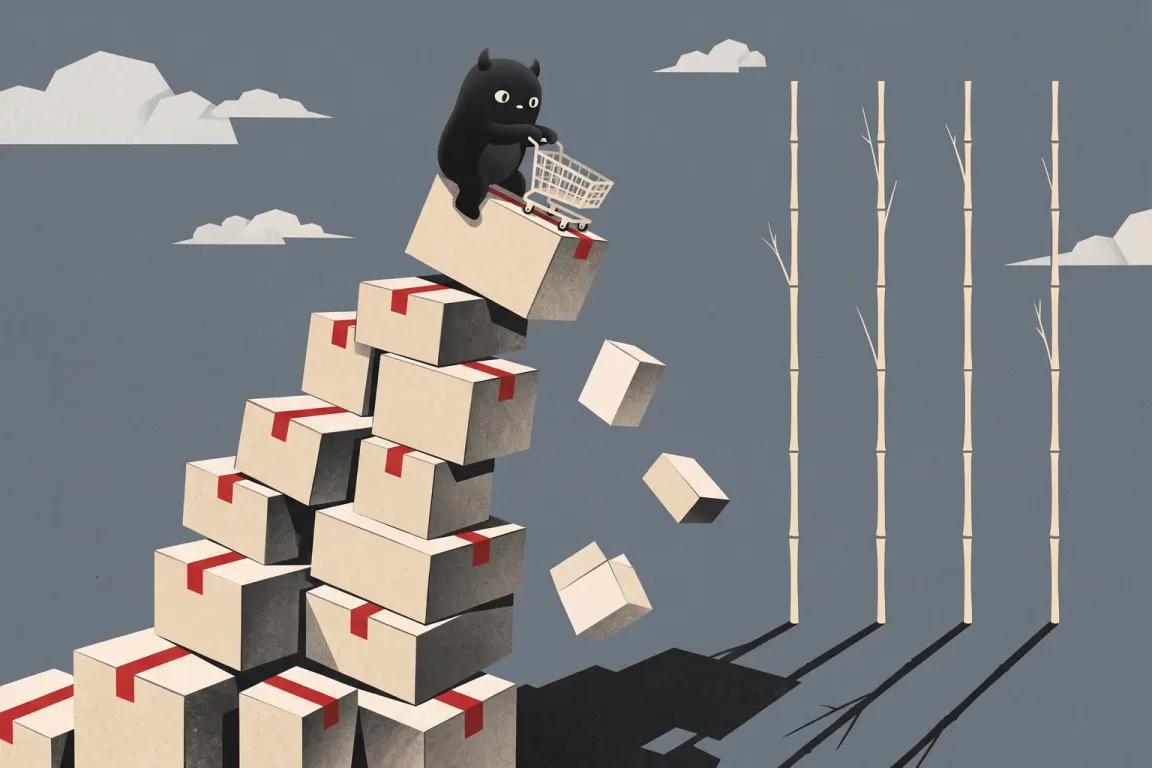
11 November is written 11.11: four ones, four people standing alone. It began as a joke about being single and became the biggest shopping event in China.
Its first name was . A is a bare stick, and in everyday Chinese an unmarried man. Now most people call the day , "double eleven", and mean the sale.
We make Dengdeng, a reading app with real stories from China. Every November, a good share of it is about discounts, deliveries, and what people regret buying.
From a joke to a sale
The singles' holiday is usually traced to university students in Nanjing in the 1990s. It was a day to mock being single, or to celebrate it with friends who were too.
In 2009, Alibaba's online mall, now Tmall, ran a one-day sale on 11 November. Other platforms joined, and within a few years meant shopping first and singles second.
The single jokes stayed. , "single dog", is a self-mocking name for someone without a partner. means leaving single life.
The sale runs for weeks
The day itself is now the end of a season. In recent years the sales have started in October.
Most of it works through , presale. You pay a , a small deposit, weeks ahead to lock in the price. Then you pay the , the rest, when the main sale opens.
Some people set alarms for the moment the final payments open. Others forget the deposit entirely.
The math of a discount
The discounts are rarely a simple percentage. They come as rules.
means "spend this much, get that much off". 30050 is 50 yuan off every 300 yuan spent.
That rule creates : adding items to your cart to reach the next threshold. People share tips for it, compare carts, and argue about whether the extra tissues were a saving or a purchase.
The word for the cart is . Filling it is , "add to cart", a step the platforms track closely.
The best-known Singles' Day word is : "chop off your hands".
It is what you say after buying too much, as in "I should chop my hands off so I stop". People who shop hard in November call themselves , the hand-chopping party.
It is a joke about regret. It usually comes a few days before the parcels arrive.
Livestreams
A large part of the selling now happens live. is selling goods on a livestream: a host tries products on camera, counts down the stock, and posts a link.
Viewers say , place an order, in the comments. When the stock goes, it is , "gone in a second".
After the sale comes the delivery rush. means a courier parcel, and in November everyone is waiting for one.
- : Logistics. The tracking screen people refresh.
- : Picking up your parcel, often from a locker or a station near home.
- : Unboxing. For some people, the best part.
- : Returning something, once the parcel is open.
A quieter festival
The platforms no longer publish one giant sales total. Alibaba stopped announcing its figure in 2022.
Online, , "rational consumption", has become part of the vocabulary: buying what you planned, skipping the bundles, and posting about what you did not buy.
If you want to read more stories from China this month, see today's stories in Dengdeng. Each story comes at three levels, and every word you tap shows its pinyin and meaning.
Also on the Blog
Dengdeng v2 is here
Dengdeng v2 adds character chats, Beginner stories, cartoons, and a new Today screen. Available now on Android, with the iOS release to follow.
 Oct 19, 2026 · 3 minRead
Double Ninth Festival in Chinese
The Double Ninth Festival (重阳节) falls on the ninth day of the ninth lunar month: Sunday 18 October in 2026. People climb hills, look at chrysanthemums, and visit their grandparents. Here are the words behind it, from 登高 and 重阳糕 to 老年节, Seniors' Day.
Oct 14, 2026 · 6 minRead