囧
Awkward
囧Awkward.
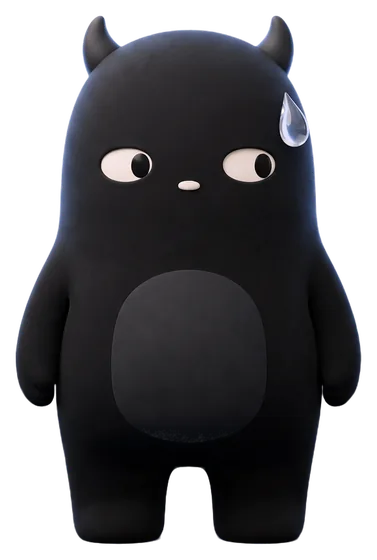
囧 is a real but rare Chinese character that looks like a face: two drooping eyebrows and an open mouth inside a frame. Since about 2008, people have used it to mean awkward, embarrassed or stuck.
- Took off
- 2008
- Started in
- Taiwanese forums
- Today
- A classic
What it means
The old meaning of the character is “bright”, from a picture of light coming through a window. Almost nobody used it. The internet meaning comes from the shape alone: the two strokes inside the box look like sad eyebrows, and the small box under them looks like an open mouth.
As a word, it describes a moment you would like to forget. 太囧了 means “so awkward”, and a 囧事 is an embarrassing thing that happened to you.
How people use it
Young people use it less than they did in 2008, and to some it sounds like a word from their older cousins’ forums. You still see it in headlines and in 囧事, and almost everyone online knows it.
今天太囧了
Today was so awkward.
怎么了?
What happened?我对着一个陌生人挥手,以为是我同学
I waved at a stranger. I thought he was my classmate.哈哈,他也挥手了吗?
Ha! Did he wave back?
More examples
我把老板叫成了妈妈,太囧了。
I called my boss Mom. So awkward.
这是我今年最囧的一件事。
That was the most embarrassing thing that happened to me this year.
Where it came from
Chinese Wikipedia traces the face to Taiwanese forums around 2004 and 2005, where people used it next to the Japanese emoticon orz, a little figure on its knees. The two were joined into 囧rz. Other accounts put the start later, in a 2008 forum thread. The first use is not certain.
In 2008 the character spread across the mainland internet, and Chinese news reports that year listed it among the most popular internet words. It later gave its name to two hit comedy films, Lost on Journey (2010) and Lost in Thailand (2012), whose Chinese titles both use 囧.
The original. There is no separate image: the character is the picture. Wikipedia shows it with its emoticon forms. Jiong on Wikipedia
Related memes
Sources
- Jiong, Wikipedia (en.wikipedia.org)
- 囧, Chinese Wikipedia (zh.wikipedia.org)
Checked November 2026. The picture at the top is our own drawing of 灯灯. It is not the original meme image.

Ten Chinese memes
One Chinese internet meme every three days for a month: where it came from, what it means and how to use it.