盘它
Work it over
盘它!Go for it!
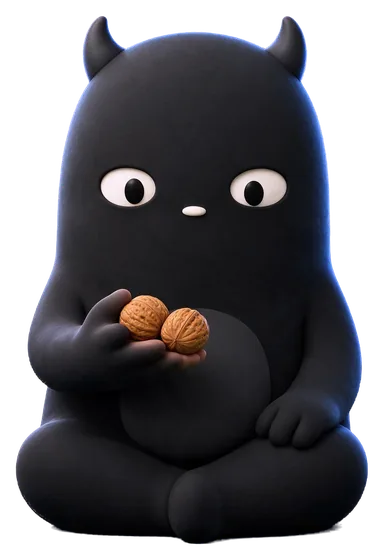
盘它 means “rub it smooth”, the way collectors rub walnuts in the hand. As a meme it means “go for it”: take on a task, a meal, a rival, almost anything.
- Took off
- 2019
- Started in
- A crosstalk show
- Today
- Fading
What it means
Among collectors, 盘 means handling an object again and again until its surface turns smooth and glossy, as people do with walnuts and wood carvings. 它 means “it”.
Online the word grew several meanings. The Paper lists three: to show you like someone or something, to say you want to beat a rival, and to answer a fight.
How people use it
盘它 peaked in 2019 and is less common now, but most people still know it. Use it about a challenge or a treat: a hard exam, a huge meal, a new game.

这家店有一个超大的汉堡
This place has a giant burger.吃完不要钱
Finish it and it’s free.真的?盘它!
Really? Bring it on!今晚就去
Tonight, then.
More examples
这道题这么难?盘它!
This problem is that hard? Bring it on!
晚饭点了一大盘小龙虾,盘它!
We ordered a huge plate of crayfish for dinner. Let’s get it!
Where it came from
The line comes from 文玩, “curios”, a crosstalk routine by Meng Hetang and his partner Zhou Jiuliang on the 2018 TV contest 相声有新人. In it, one performer calls a wooden carving dry and rough, “not smooth at all”, and ends with 盘它!
Short-video creators reused the clip, and in early 2019 盘它 trended on Weibo several times. That December the Shanghai paper 语言文字周报 put it second on its list of the ten internet phrases of 2019.
Both spellings are common: 盘它, with “it”, and 盘他, with “him”.
The original. A clip of the routine: one performer describes a rough carving with big, angry gestures and ends with the line. The Paper explains it. The Paper (in Chinese)
Related memes
Sources
- The Paper: the internet phrases of 2019 (in Chinese) (thepaper.cn)
- Huxiu, February 2019 (in Chinese) (huxiu.com)
- Yicai, December 2020 (in Chinese) (yicai.com)
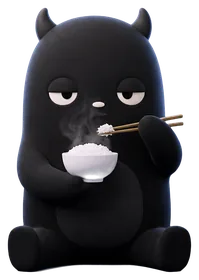
Checked November 2026. The picture at the top is our own drawing of 灯灯. It is not the original meme image.
Ten Chinese memes
One Chinese internet meme every three days for a month: where it came from, what it means and how to use it.