真香
So good (eating your words)
真香!So good!

真香 means “it smells so good”. As a meme, it is the line for the moment someone swears they will never do something, then does it and enjoys it.
- Took off
- 2018
- Started in
- A reality show
- Today
- Now everyday Chinese
What it means
It is a joke about changing your mind. You say it about yourself to admit a turn, or about a friend to tease them. People call the pattern 真香定律, “the law of 真香”: the idea that people always break their “never” sooner or later.
How people use it
真香 is now ordinary online Chinese. It works for food, phones, TV shows and apps, anything you once refused.

你不是说不喜欢吃榴莲吗?
Didn’t you say you don’t like durian?是啊,太臭了
Yeah, it stinks.那盒子怎么空了?
Then why is the box empty?……真香
…OK, it’s so good.
More examples
我说不喝奶茶了,结果又买了一杯,真香。
I said I’d quit milk tea, then I bought another cup. So good.
他以前说不玩这个游戏,现在天天玩,真香!
He used to say he’d never play this game. Now he plays every day.
For the word itself and how to reply to it, see 真香 in the slang dictionary.
Where it came from
The scene comes from 变形计, a Hunan TV reality show in which city teenagers swap lives with children in the countryside. In an episode that aired in June 2014, a teenager sent to a village in Yunnan refused the family’s food and said he would rather starve. Later in the episode he sat down with a bowl of fried rice, ate, and said 真香.
The clip came back in April 2018, when meme-maker apps made it easy to turn the scene into GIFs and stickers. 真香警告, “真香 warning”, became a common reply to anyone who said “never”.
The original. A clip from the show: a teenager at a rural kitchen table eats fried rice, smiles and nods as he says the line. ifeng News tells the story behind it. ifeng News (in Chinese)
Related memes

Sources
- ifeng News on the 真香 clip (in Chinese) (news.ifeng.com)
- ifanr: the memes of 2018 (in Chinese) (ifanr.com)
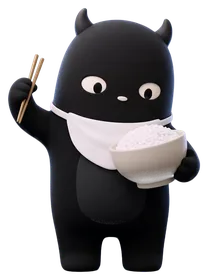
Checked November 2026. The picture at the top is our own drawing of 灯灯. It is not the original meme image.

Ten Chinese memes
One Chinese internet meme every three days for a month: where it came from, what it means and how to use it.