打卡
Check in
打卡!Checked in!
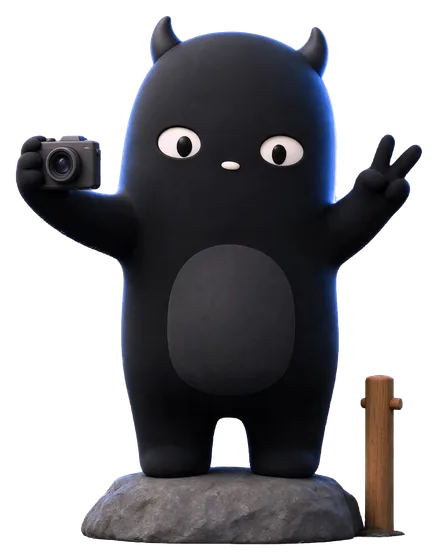
打卡 means “to punch the clock” at work. Online it means to go somewhere or do something and post a photo as proof: a famous café, a mountain top, day 30 of a workout plan.
- Took off
- 2018
- Started in
- Office time clocks
- Today
- Now everyday Chinese
What it means
There are two online senses. The first is travel: a 网红打卡地 is a place that is famous online, where people go to take the same photo and post it.
The second is habits. To 打卡 a task is to do it on schedule and record it: 跑步打卡 for a daily run, 学习打卡 for daily study.
How people use it
打卡 is now ordinary Chinese, and the office sense is still in daily use. If a friend says they 打卡 a new restaurant, they went there and posted it.

你去哪里了?朋友圈全是照片
Where’d you go? Your feed is all photos.去那家新开的书店打卡了
I checked in at that new bookstore.书买了吗?
Did you buy any books?没有,只拍了照
No, I just took photos.哈哈,标准打卡
Haha, a classic check-in.
More examples
这家咖啡店是网红打卡地,周末人特别多。
This café is a famous photo spot. It’s packed on weekends.
今天是我跑步打卡的第三十天。
Today is day 30 of my running check-ins.
我们去长城打卡吧!
Let’s go check in at the Great Wall!
Where it came from
In offices, workers 打卡 with a card to record when they arrive and leave. In 2018 Eye Shenzhen described the new online sense: finishing a scheduled task to build a habit or reach a goal.
Short-video apps spread the travel sense. In 2019 The Economist described daka as uploading a photo or video from a photogenic spot to Douyin or Kuaishou to prove you were there, with Chongqing’s Hongyadong as a favorite spot.
The World of Chinese, in 2024, compares “check-in” travel to the office clock: you have to go, and you have to post the proof.
Related memes
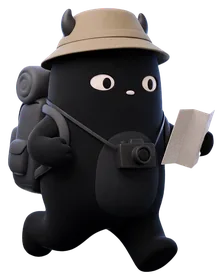
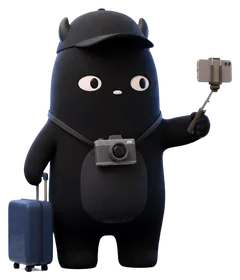

Related slang in the dictionary: 网红
Sources
- Eye Shenzhen, September 2018 (eyeshenzhen.com)
- Sohu: The Economist on daka travel, December 2019 (in Chinese and English) (sohu.com)
- The World of Chinese, April 2024 (theworldofchinese.com)
Checked November 2026. The picture at the top is our own drawing of 灯灯. It is not the original meme image.

Ten Chinese memes
One Chinese internet meme every three days for a month: where it came from, what it means and how to use it.